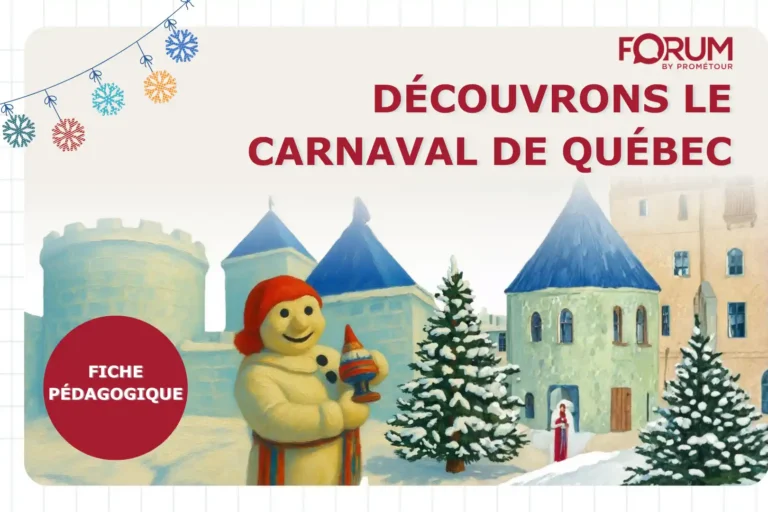
Looking for a winter lesson that gives your students a real reason to use French? The Carnaval de Québec is a fun way to introduce Francophone Canada while practicing vocabulary, listening, discussion, and writing.
This ready-to-use lesson introduces students to Québec City, Bonhomme, and some of the traditions that make the Carnaval such a special part of French-Canadian culture. You can teach the full lesson or choose individual activities based on your class time and students’ level.
The Full Lesson Plan also includes simple French translations, so you can decide which language you would prefer to use when leading the class.
Your students will:
- Locate the Province of Québec and Québec City on a map.
- Learn key facts about the Carnaval de Québec.
- Build French vocabulary related to winter and carnival activities.
- Practice listening comprehension with an authentic Québécois song.
- Share what they learned through discussion and a short writing activity.
Connect the Carnaval lesson with a classroom in France
The Carnaval de Québec can also become a conversation starter with students in France. Through Connecting Classrooms, your class can share short, guided videos and compare festivals, winter traditions and everyday life.
Forum arranges the classroom match and provides the activities and support, while you choose what works best for your class. Submit an interest form to take part.
FREE VIRTUAL EXCHANGE FOR YOUR FRENCH CLASS
Give your students the opportunity to interact with students in France
Connecting Classrooms is a free virtual exchange where students share short, guided videos with a partner class in France. They can discuss what they have learned about the Carnaval de Québec while comparing festivals, winter traditions and everyday life.
FREE FOR SCHOOLS • GUIDED ACTIVITIES • TEACHER SUPPORT
1. Start with Québec
Begin by showing students a map of North America. Ask if anyone can locate the province of Québec, followed by Québec City.
Once students have found it, share a few quick facts. French is the official language of Québec, Québec City is the provincial capital, and Montréal is its largest city.
This warm-up gives students some helpful context before they begin learning about the Carnaval.
2. Meet Bonhomme and explore the Carnaval
Play Have Fun at Québec Winter Carnival on YouTube for your class. The short video gives students a look at the festival’s snow sculptures, parades, winter activities, and famous Ice Palace.
The first major winter carnival in Québec City took place in 1894. The modern Carnaval began in the 1950s, and Bonhomme made his first public appearance in 1955.
Introduce Bonhomme as the Carnaval’s official representative and best-known symbol. His red tuque and ceinture fléchée are closely connected to French-Canadian culture and the history of the festival.
3. Build Carnaval vocabulary
Hand out the student worksheet and begin with Exercises 1 and 2.
In the first exercise, students match French vocabulary with its English equivalent. The second exercise asks them to label images using words such as:
- la tuque
- la neige
- le chocolat chaud
- le sirop d’érable
- le traîneau
- le château
Review the words aloud before moving on. You can also ask students which objects or activities they noticed in the first video.
FROM THE CLASSROOM TO QUÉBEC CITY
Where could this lesson take your students?
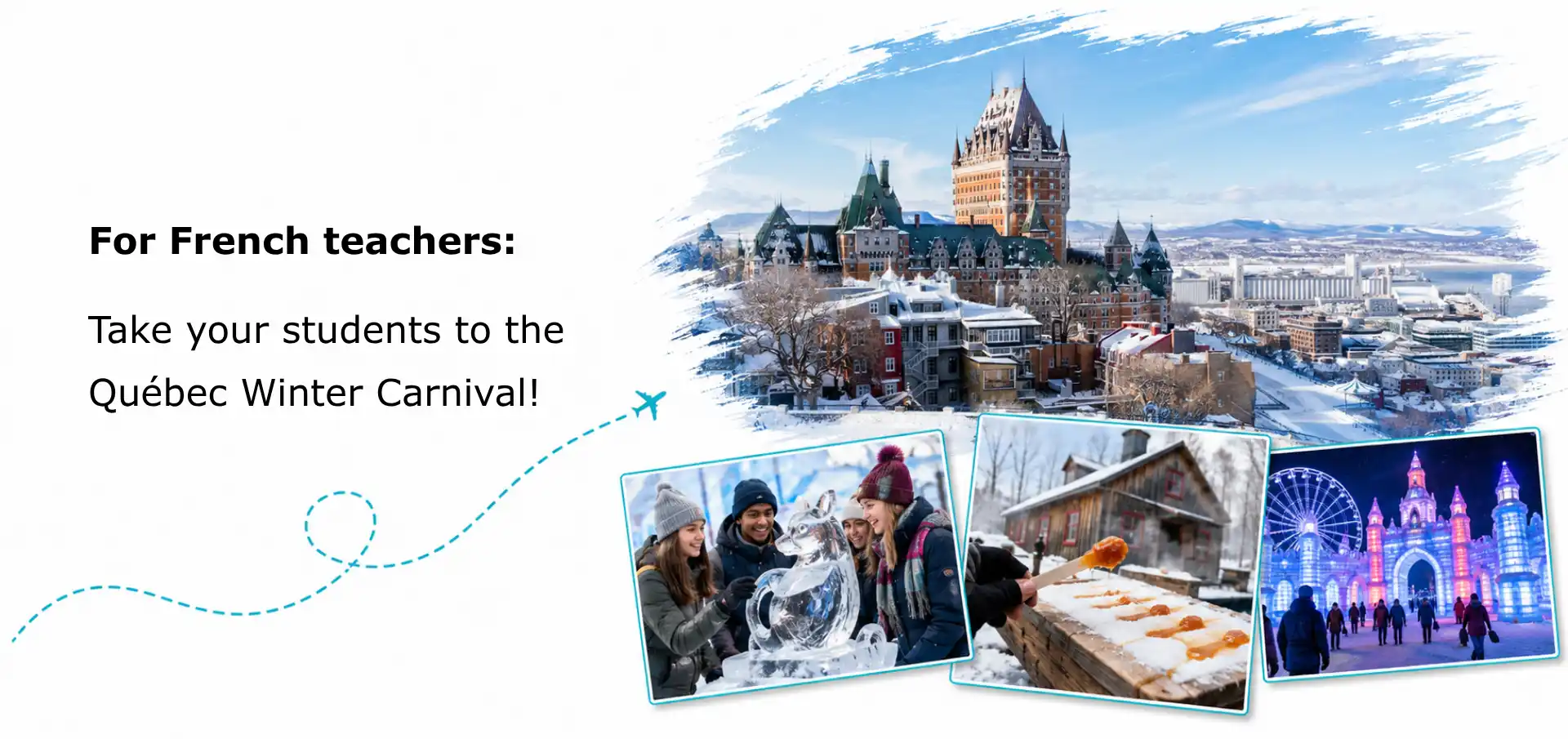
Your students have now explored Québec, met Bonhomme and begun using Carnaval vocabulary. Show them where their French could take them with our four-day Québec Winter Carnival Student Tour, featuring Old Québec, a traditional sugar shack and the Carnaval itself.
Not ready to plan yet? Keep reading for the classroom activities below.
4. Listen to Salut Bonhomme!
Next, introduce the official Carnaval song with the Salut Bonhomme! video.
Before playing it, ask students to read the vocabulary in Exercise 3 aloud. During the first listen, they check off each word they hear.
Play the song a second time so students can complete the missing words in the worksheet. All the answers appear in the vocabulary section above the activity.
The worksheet covers the first half of the song. Stop the video at approximately 1:45, when the five men wearing red-and-black flannel jackets appear.
5. Finish with a Carnaval postcard
For the final activity, students imagine they are attending the Carnaval de Québec and complete a postcard to a friend at home.
Review the vocabulary from the lesson before they begin. You can also invite students to suggest a few extra French words they might want to use, such as descriptions of the weather, food, activities, or places.
Encourage students to personalize their postcards. When they finish, they can read them with a partner or share one detail from their imaginary Carnaval visit with the class.
Discussion Questions
Use these questions during the lesson or as a final class discussion:
- Which Carnaval activity would you most like to try?
- Which activity would be the most difficult for you?
- What similarities do you notice between the Carnaval de Québec and other festivals you know?
- What differences do you notice?
- What would you add to make the Carnaval more appealing to students your age?
- How can a festival like the Carnaval bring a community together?
Bring the Carnaval de Québec from textbook to reality
Once your students have met Bonhomme, practiced the vocabulary, and written their postcards, show them where their French could take them.
Our four-day Québec Winter Carnival Student Tour is designed with French classes in mind. Students can explore Old Québec, visit a traditional sugar shack, enjoy winter activities, and experience the Carnaval celebrations in person.

Leave a comment