
The 2026 World Cup is right around the corner, and what better way to bring cultural excitement into your Spanish classroom than by tapping into fútbol fever?
We’ve created a dynamic video and lesson plan designed to show your students how to become authentic fans of La Roja – Spain’s national soccer team. Whether your students are fútbol superfans or total beginners, this short and entertaining lesson will spark their interest in Spanish culture, vocabulary, and real-world communication.
Download the Spanish Lesson Plan: Become a Fan of Spain!
Teacher’s Guides with Full Lesson Plan
Printable Student Worksheets
Video Resource
The Video: Lucas & Destiny in “¡Conviértete en un auténtico aficionado de la selección española!“
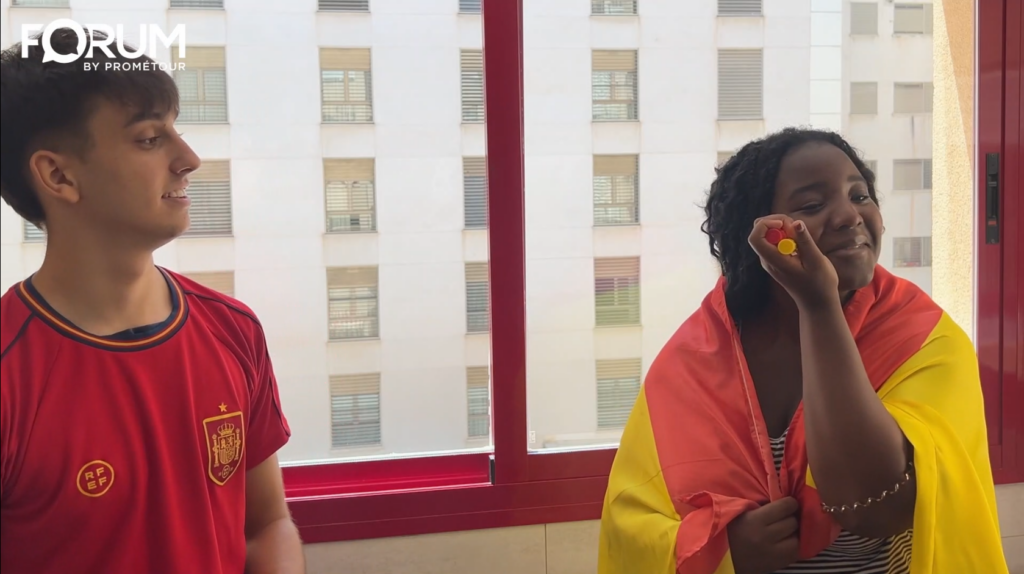
The video features Lucas, a student intern from Spain and a proud Spanish fan, and Destiny, a German-American intern learning the essentials of Spanish soccer culture.
Lucas teaches Destiny how to become an authentic Spanish soccer fan, from wearing a scarf and face paint to cheering, chanting, and enjoying typical match-day snacks.
The student video is fast-paced, funny, and accessible for high school Spanish learners, making it a great classroom resource for building vocabulary, listening comprehension, and cultural awareness.
Students will learn about:
- Key vocabulary: bufanda, GOOOOL, uy, uy, uy, bocadillo, crack
- Fan behavior: cheering respectfully and reacting to goals, near misses, and VAR
- Cultural chants: including the famous “Olé, olé, olé”
- Spanish players mentioned in the “¡Conviértete en un auténtico aficionado de la selección española!”: Dani Carvajal, Pedri, Álvaro Morata, and Lamine Yamal
- Popular match-day snacks: patatas fritas, bocadillo de jamón, and Fanta de naranja
- And more…
Materials Needed
For this lesson, teachers will need:
Learning Objectives
By the end of the lesson, students will be able to:
Classroom Activity
1. Warm-Up
Begin by asking students a few opening questions in spanish:
- Have you ever watched a soccer match?
- What do you know about Spain’s national team?
- How do fans usually support their favorite team?
2. Watch the Video
Play “¡Conviértete en un auténtico aficionado de la selección española!” twice. During the first viewing, students focus on the general idea.
During the second viewing, they listen for Spanish words, expressions, fan behaviors, and cultural details they recognize. This first viewing helps students understand the general idea of the video while introducing them to Spanish soccer fan culture in a fun and natural way.
3. Students Complete the Worksheet
Students complete the worksheet individually. The questions are simple and clear so that everyone can follow the activity, understand the main ideas, and be on the same page before the class discussion.
4. Vocabulary Practice
Students use the worksheet to connect vocabulary with the real context presented in “¡Conviértete en un auténtico aficionado de la selección española!“.
5. Chants and Fan Behavior
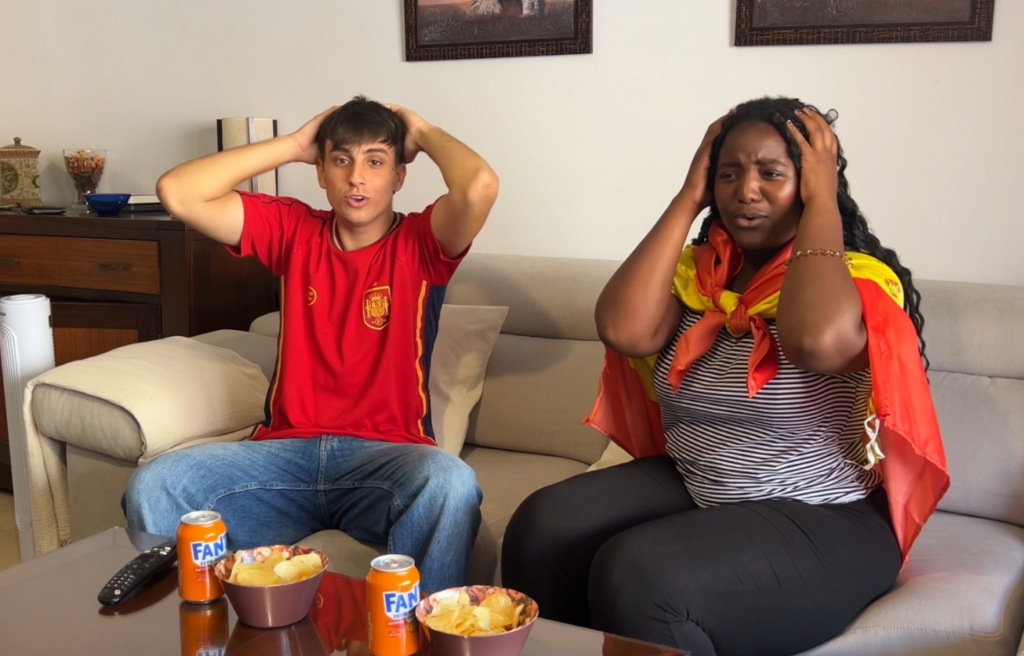
Practice typical soccer fan expressions together as a class.
This section gives students the chance to practice pronunciation, rhythm, expression, and confidence in a playful way.
6. Meet the Players
Introduce the players mentioned in the “¡Conviértete en un auténtico aficionado de la selección española!“:
• Dani Carvajal • Álvaro Morata
• Pedro González López • Lamine Yamal
Teacher’s note – This video was filmed earlier this year, before Spain’s final World Cup 2026 squad was announced. Pedri and Lamine Yamal are part of Spain’s squad, but Dani Carvajal and Álvaro Morata were not included. Carvajal had struggled with injuries and limited playing time, while Morata was left out after a difficult season and as part of a technical selection decision.
Ask students which player they would want to cheer for and why.
This gives students a cultural entry point into Spain’s national team and encourages simple speaking practice.
7. Spanish Match-Day Snacks
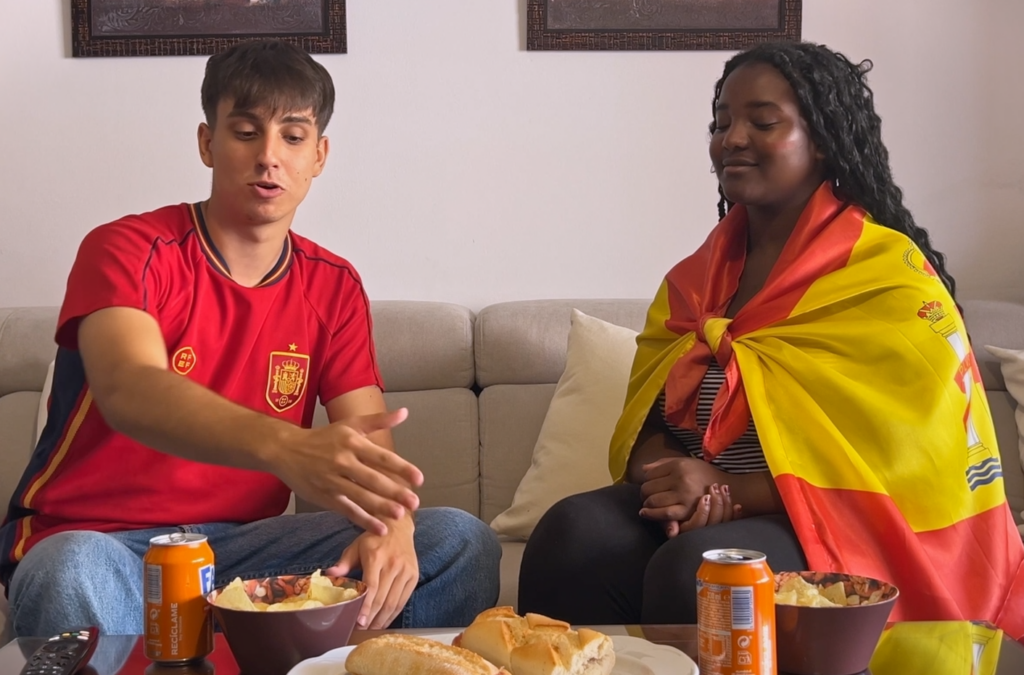
The question: “What snacks do appear in the video?”
Discuss how do they compare with American TV snacks.
8. Wrap-Up Reflection
To conclude the lesson, students complete the final reflection section of the worksheet.
They reflect on:
This step helps students connect the activity to broader ideas about language, identity, culture, and shared excitement.
9. English Words in Spanish Soccer Culture
In the “¡Conviértete en un auténtico aficionado de la selección española!“, Lucas uses some English-origin words while speaking Spanish, such as:
• fan • fair play • snacks • VAR • crack • top
Use this as a short language discussion. Ask students why English words may appear in Spanish sports talk.
This opens the door to a broader conversation about language borrowing, global sports culture, and communication across languages.
Assessment
Teachers can assess student learning through participation, worksheet completion, and speaking activities.
Possible assessment methods include:
Differentiation and Support
Teachers can adapt the lesson for different student levels by:
Cultural Extension Ideas
To take the lesson further, teachers can invite students to:
Questions
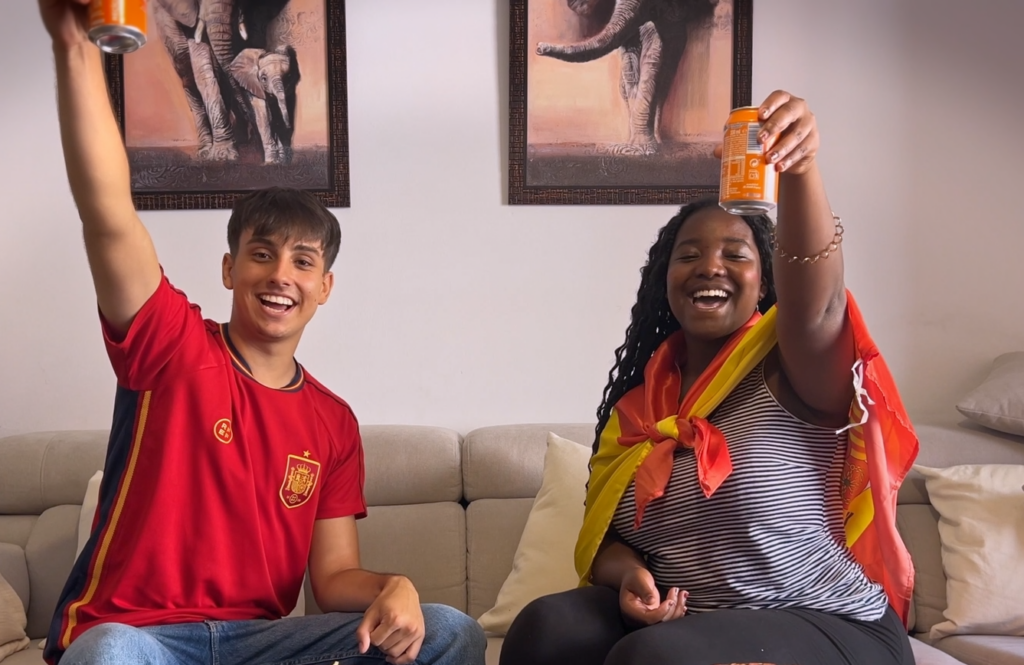
Take It a Step Further…
Take your students beyond the classroom and into the heart of Spain’s football culture with an unforgettable educational trip.



Leave a comment